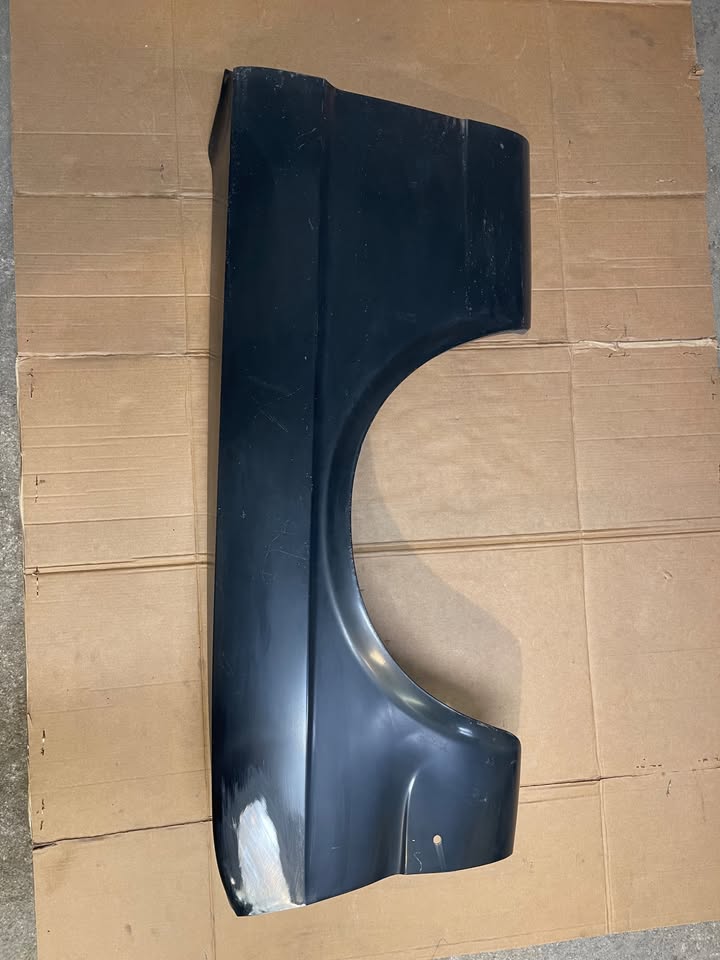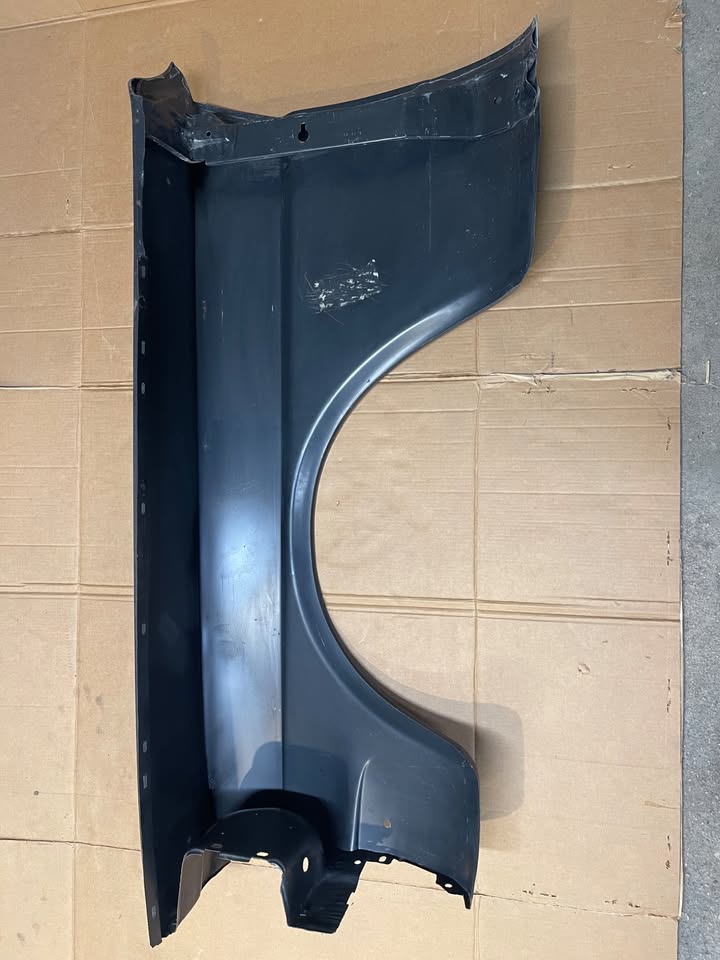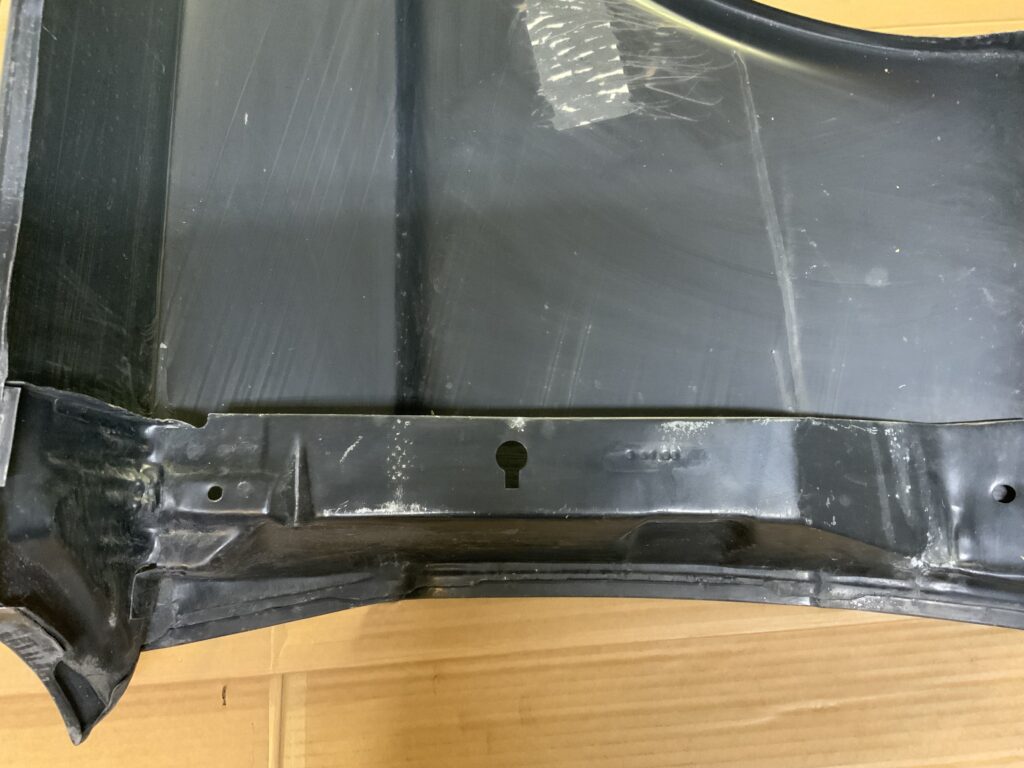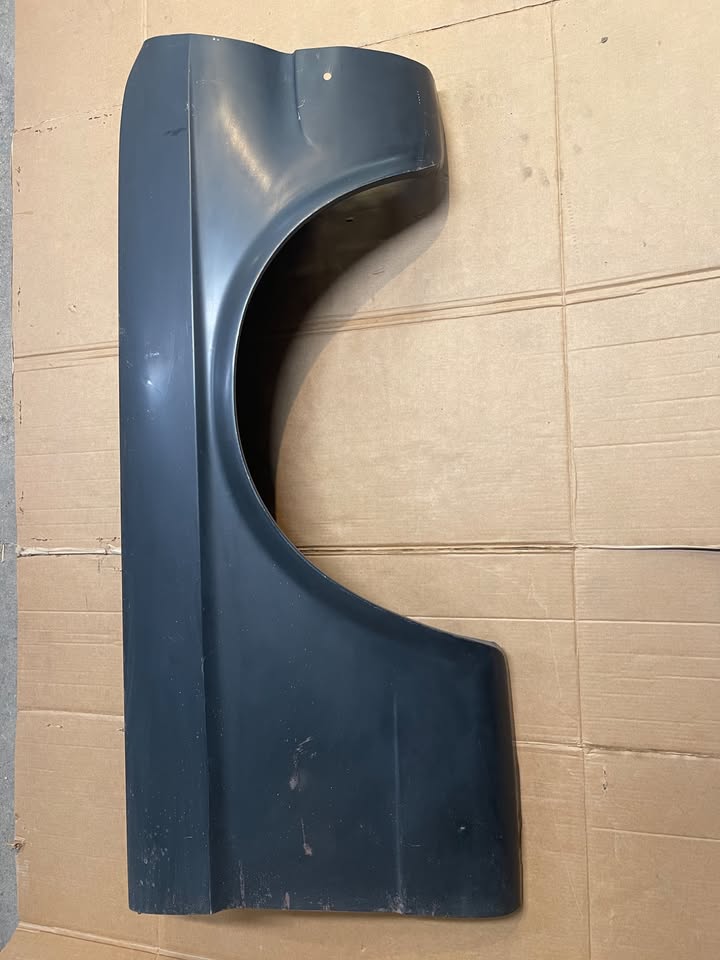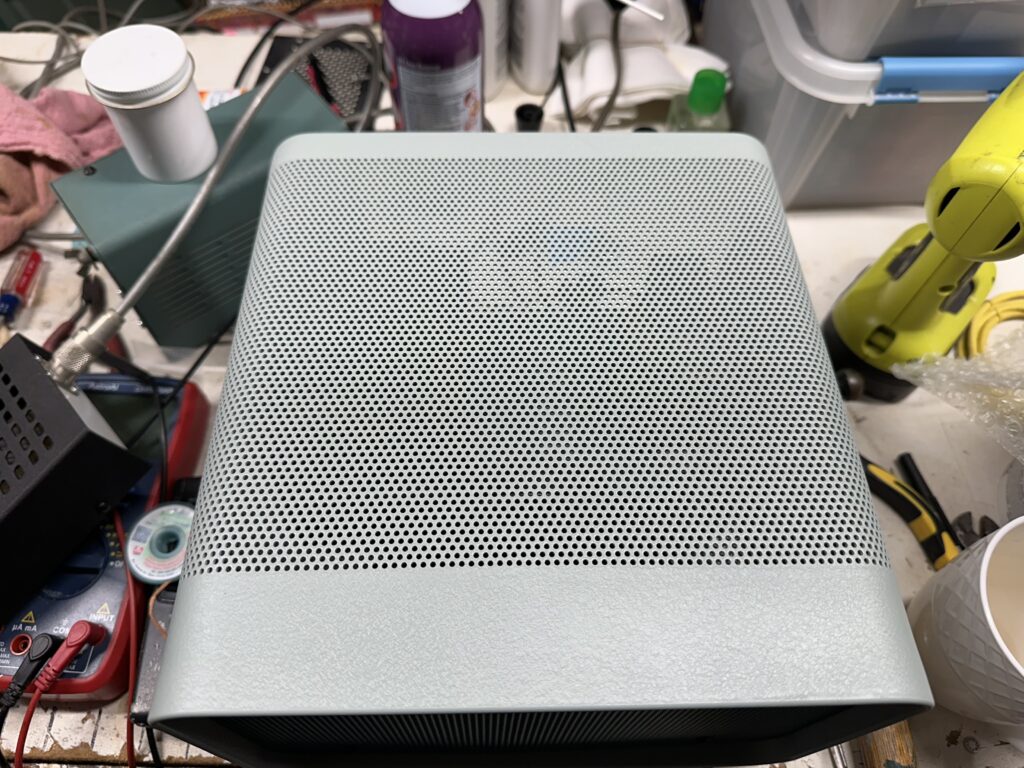
New fenders scored!

I found a pair of “new”, as in new old stock, fenders for the Mustang listed on Facebook Marketplace. After a little digging, these appear to be manufactured by Ford as service replacement parts. Lord only knows when. They’re not 1960s vintage, as those were primed in red with the part number stenciled on yellow in the inside. These are black primed, and they had parts system stickers on them at some point that were scraped off. So I have no idea when they were produced, but the date stamps indicate they were Ford parts. They seem to be pretty decent quality, a little heavier gauge steel than I have seen on some new parts.

The old fenders are too far gone to save, and I got these for less than a single new repro part would cost me after shipping. In fact, maybe less than one before shipping. NPD carries two different brands of fenders; one is under $250 and the other over $450 per side. Plus truck freight, of course. Are the cheap ones decent? Can you tell the difference between those and the expensive ones? Don’t know, and no real way to tell. Reviews aren’t terribly helpful; one guy’s “These suck” may be another’s “The guys at the restoration shop were able to make them fit with a few hours’ work”. Whatever, now I don’t have to worry about what to buy.

SB-101 Dial Drive Overhaul

When I bought the Heathkit SB-101, the dial drive was a mess. The dial itself, of course, was old and severely cracked. Much worse, though, was that FedEx had dropped the rig on its face – and even though it was bubble wrapped, whoever packed it didn’t bother to put Styrofoam blocks between the knobs. That would have protected the face and knobs, but as it was the main tuning dial was damaged. The aluminum skirt was bent, and the drive pulley was damaged.

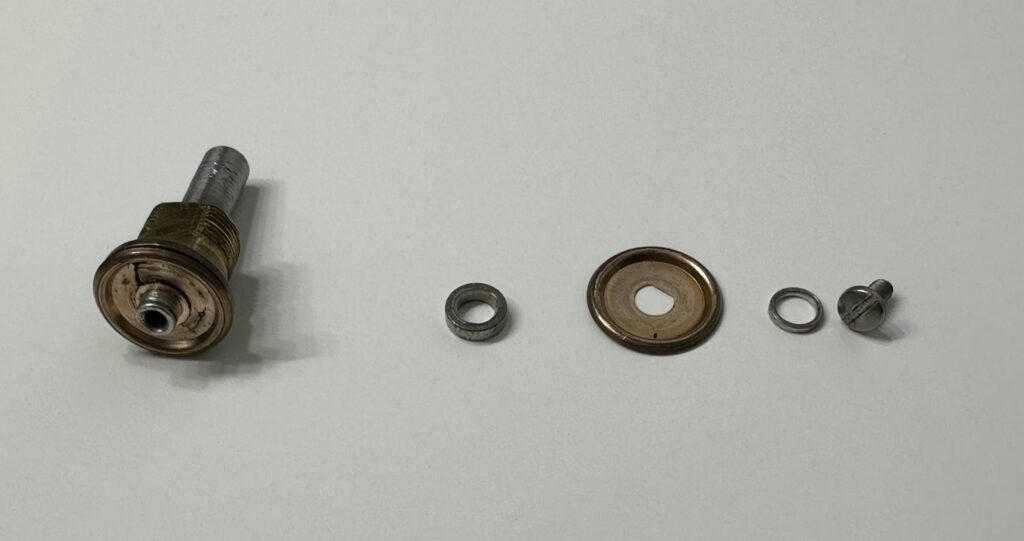
The drive pulley consists of a pair of bronze washers, each with a rolled bead near the outer perimeter, which are spaced slightly apart using a tiny aluminum spacer. That assembly grips an aluminum drive ring that’s attached to the plastic dial. The raised beads put pressure on the drive ring to turn the main dial. Well, on mine, one of those bronze washers is cracked and bent. I was unable to get it sufficiently straightened out to give a solid grip on the tuning drive ring all the way around, so the knob would slip on the dial. Of course no replacement parts are available anywhere, other than from a parts rig – which I don’t have.

With nothing to lose, I decided to try something new. I got the damaged washer as straight as I could, then grabbed a 2 x 5 mm silicone O-ring left over from a coffee machine repair. I put that around the spacer in between the bronze washers and reassembled the mechanism. Success! The operation was now smooth, positive, and free of the slippage I’d experienced before.

Left to right: The shaft and outer drive washer, crack visible at about 11 o’clock. Next is the middle spacer, inner washer, end spacer, and the screw that holds it all together.

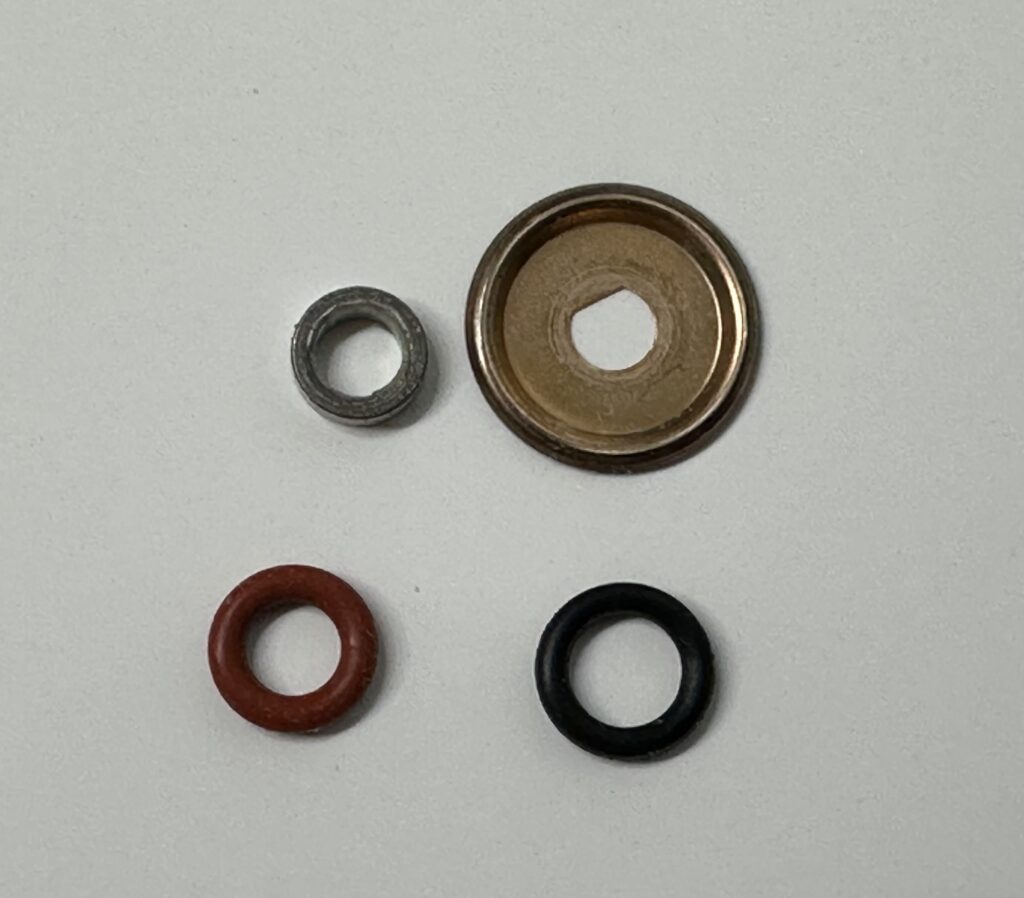
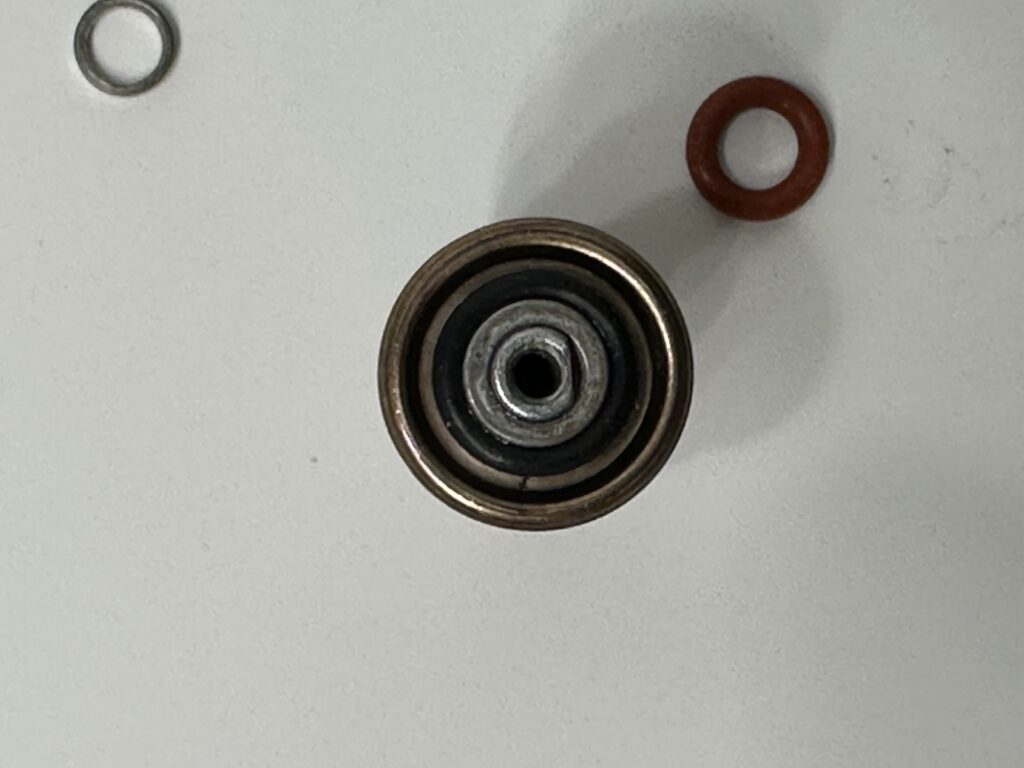
After a few days of use, however, I noticed some slipping again. I suspected there was a little oil or grease that had migrated to the O-ring, and I was right. I pulled the assembly apart and thoroughly cleaned everything with some 91% isopropyl alcohol and paper towel. When I re-assembled it, I used a #009 neoprene O-ring. It’s very close to the 5 x 2 mm O-ring I had in there before, but I was hoping that the very slightly smaller cross section and the neoprene material might give a little more traction. I also used a Q-tip with a little alcohol to clean off the dial drive ring, in case there was oil or aluminum oxide on that.

The middle spacer and inner washer, with the silicone (red) and neoprene (black) O-rings.

With everything back together, I once again had smooth, positive drive with no slipping. Time will tell how well this fix holds up, but it’s definitely better than the nearly unusable state in which I received the rig.

The new O-ring in place around the center spacer before re-assembly

So far the tuning dial has worked out OK. If it fails, I have a vague plan for a 3D printed center hub for the dial with a ring gear, and a pinion gear for the dial shaft. I understand why this might be one reason the HW-100 is more popular than the SB-100/101/102, but this may also help some owners of other SB-line gear like the SB-300/302 and 400/401.

SB-101 Troubleshooting, Part 3

After getting some really good advice from the Heathkit Radios group, I did some further troubleshooting. I re-soldered much of the RF driver board, having found a spot that would change the symptoms when it was hit with freeze spray or tapped with a wooden probe.

At one point, I just got curious as to what the SSB performance was like compared to CW. Surprise! In SSB mode, I could key the mic and get pretty good output. That told me the problem was limited to CW and tune mode, which pointed only one place… the mode switch! I had cleaned that switch at least once before, but I did it again. A squirt of the nearly depleted can of Radio Shack tuner cleaner, a dozen or more rotations in each direction, and … yes, now it’s working.

After completing the transmitter alignment procedure, I put the whole thing back together (mistake, as it turned out) and took it all upstairs where I have my other rigs. I tuned the TS-850S to WWV and zero-beat the 100 kHz calibrator as closely as I could. Then I figured out that i really needed to move the dial pointer on the LMO shaft. Remember how I said I’d put everything together? It’s a real bear trying to get at the set screw to make that adjustment when it’s in the cabinet. I managed, but I may have used a word that I would not repeat on the air.

With all that done, I resorted to a sked and had a nice chat on 20 meters with Dan, W7RF. I was tuned up for close to max output, and got a good report for audio and signal strength given my little 70′ wire in the trees in the back yard. The rig is now officially “in use”!

SB-101 Troubleshooting, Pt. 2

The previous work got me thinking. The LMO problem was, apparently, flaky rivets at the RCA connector; I peened those and the instability went away completely. The scratchy noise in the audio was fixed by generous application of desoldering braid and fresh solder on the audio board. And, whereas I was seeing only a few mV of RF at the output side of T1 (the balanced modulator output transformer), after again re-soldering a few points I’ve suddenly got close to the expected level – about 260 mV peak. No real explanation for why it suddenly jumped from 25 to over 250 mV. All of this points to bad connections and oxidization.

Now onward. V3 is not amplifying as it should. I get about 150-175 mV peak RF out of pin 5 (the plate) where it should be around 7 V. I swapped V3 with V4, then V2 & V3 with V10 & V11, since they are all the same 6AU6 type. Of course that didn’t make a difference. I’m not expecting to find bad tubes. What I suspect is happening is that there is old flux contaminating a number of solder joints. After sitting idle for decades, there is now oxidization that is getting disturbed by heat and motion. That’s causing these marginal or bad solder joints to rather randomly manifest themselves. The solder joints all look OK; most are not terribly pretty, as I would expect with a Heathkit, but solid. It’s telling, though, that de- and re-soldering is fixing so many issues. I decided to simply go through and de-solder, thoroughly clean, and properly re-solder every joint I could get to on the IF, bandpass, and driver boards.

I also had a very flaky meter zero potentiometer, and if it’s bad then the carrier null is probably not far behind. Of course you can’t buy direct replacements for the originals, so I bought some new top-adjust 10 turn trim pots. One of them fixed the meter zero issue quite nicely, and I’ll replace the carrier null pot when I have time.

Unfortunately none of the work I have done has had the slightest impact on the RF output. It’s still next to nothing. About 1W or less on 80 meters, and maybe 10 or 12 on 10 meters. I’ve asked advice on the Heathkit radios group (here) and and working with a couple of guys who understand tube circuits better than I do to troubleshoot.

SB-101 Troubleshooting

Wow, what fun we’re having!

This rig has been one problem after another. After I got all of the bad resistors replaced, a new problem occurred. No or close to no RF output. I can coax a watt or so out of it on 80 meters, maybe 5 W out on 10 meters. My troubleshooting efforts were hampered by the fact that while I could probe around all I wanted with an O-scope or meter, nothing in the manual gave any indication (at least none that I could find) of the expected RF signal levels in the path – the carrier oscillator, VFO, etc. So I could see the carrier oscillator was producing about small fraction of a volt peak to peak, but I had no idea if that was right or not (but it seemed awfully low to me).

Here’s where the folks in the Heathkit group at groups.io really were helpful. It turns out that the schematics printed in the manual for the Heathkit HW-101, which is nearly identical to the SB-101, do indeed show expected RF signal levels at numerous points in the circuit. Armed with that information, I confirmed that at least part of the problem was a very low signal from the carrier oscillator. In an effort to double-check my work, I went back and re-checked every part I had replaced – after which the oscillator signal was fine (more or less). That told me there was a physical problem. It could be bad solder joints, bad ground, a cracked board, or a cracked part. Just poking around with the meter probes had changed things.

After much trial, tribulation and scope work, I spent some time de-soldering and re-soldering most of the modulator circuit board. That seemed to stabilize the carrier oscillator in a working state. I had to do the same to the audio board to solve a newly developed scratchy intermittent noise issue that appeared. Along the way I discovered a bad connection to the LMO output RCA plug. Then the LMO started randomly jumping 1, 2, or maybe 10 kHz whenever it was tapped or touched. I ended up peening the two pop rivets holding the phono jack in the back of the LMO to fix that one.

Now at least I’m back to having a relatively stable, quiet rig with a fixed symptom I can chase. That symptom is a good signal from the carrier oscillator reaching the balanced modulator, a relatively normal signal at the input to the modulator transformer, and not much of anything coming out of that transformer. Right now I’m feeling a little foolish because I had that transformer out of the radio this morning, opened it up, re-glued the coil form to the base, checked that the wires were still attached to the pins… and did not check the windings for continuity. What a rookie move. I’ll check that in the morning.

SB-600 Speaker

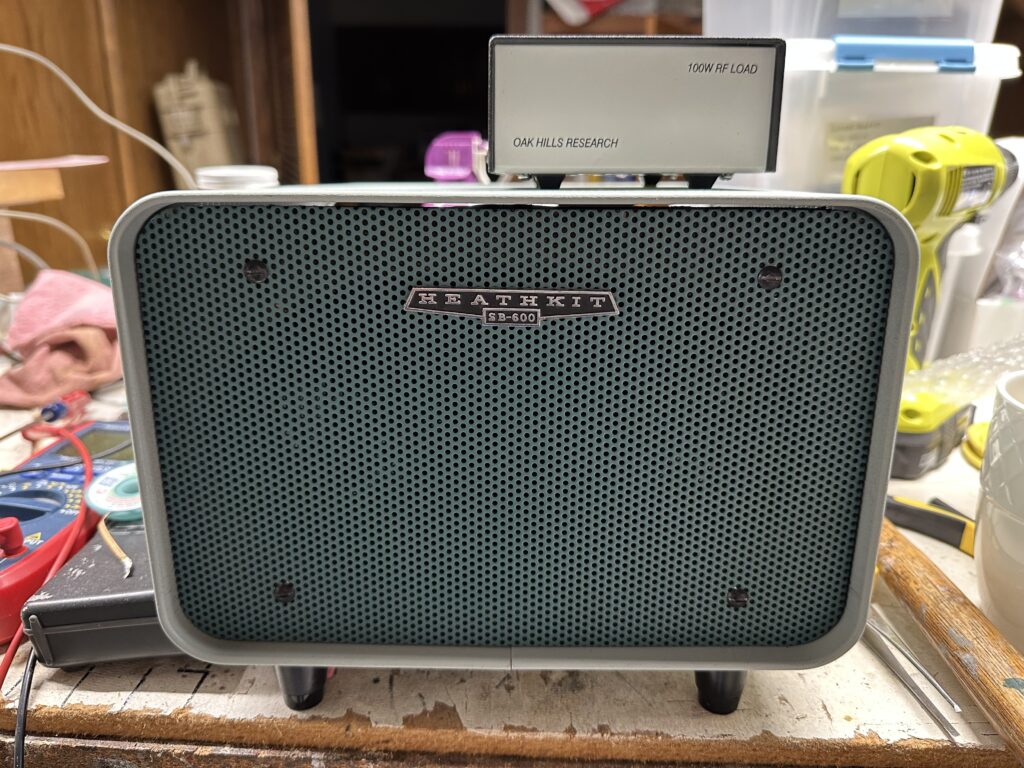
Unfortunately, I discovered that the speaker coil of the SB-600 is open and the speaker is dead. The SB-600 is a station speaker that matches the SB-101 and holds a singe 8 Ohm, 6” x 9” speaker. The radio’s HP-23 power supply also mounts in the cabinet behind the speaker. After tearing it down I found that the wire between the connection terminal and the coil itself was broken – this is where a very fine wire is stuck down to the paper cone with some sort of enamel or lacquer coating. I don’t feel bad about trashing the speaker to find that out. Even if I’d been able to find it right away, I don’t think I’d have had any success trying to expose the wire and solder it back together on top of the very brittle old paper cone. Better to just replace the speaker and hope the judges don’t notice and deduct too many points at the Pebble Beach Concours d’Elegance for ham radio equipment.

6 x 9 speakers are pretty common, mostly used for car audio. Unfortunately most are 4 Ohm impedance, are not sold singly, and are pretty expensive for this application. While cheap, paper cone 8 Ohm speakers were very common fifty years ago, they aren’t now. I do have a couple of 4 Ohm car door speakers, but they’re the wrong size – 4″ x 6″. I tried one and it seemed to work fine on the SB-101, so I went ahead and ordered a new low-end single 6×9 replacement speaker rather than spend weeks trying to source an 8 Ohm speaker at a reasonable price. Ah, the best laid plans…

I wanted to freshen up the paint on this and the SB-101. They’re not in bad shape, but after this much time has passed since they were new the cabinets collect some nicks and scrapes. A fresh coat of paint is not out of line. Will, N5OLA also sells color-matched paint for the Heathkit SB and HW series equipment. He’s got both spray cans and bottles of touch-up paint with brushes in the caps. I ordered a can of each. Of course the spray paint isn’t textured like the original, but I’m not stripping down to bare metal – just spraying a light coat over the existing paint. I figured if it were too glossy I’d “dust” on a couple light coats to knock down the sheen and preserve the original look. I need not have worried; the paint is a perfect match in both color and sheen.

With the paint done, all that remained was to get it all put back together with the new speaker and the power supply mounted in the back. The HW-series paint is a darker, more turquoise green that is a nice match for the speaker grille on the SB-600. I mainly bought that paint to see if it’s the right color to turn my HG-10 VFO into an HG-10B so it matches my HW-16 transceiver (it is and it did), but it matches the SB-600 grille so well I went ahead and shot a coat on that as well. That takes care of the places where the four black screws for the speaker had taken the paint off when they were installed.

Naturally the speaker mounting holes were off a little, and it was just a touch too wide in the 6″ direction to fit the cabinet. A few whacks with a ball-peen hammer to flatten the sheet metal edges took care of the size, and a step drill bit enlarged the holes enough for everything to fit right. Unfortunately, the audio output is too low and distorted for this to work on its own. I ordered some 4 Ohm 10 W resistors. Adding one of those in series with the speaker made things better. Not perfect, but better. If I find a suitable 8 Ohm speaker for a reasonable price, I’m going to replace it (even though that means pulling the HP-23 back out again, which I don’t enjoy).

I had ordered some new replacements for the rubber feet that Heathkit used – sold as “cutting board feet” on Amazon in several different sizes. With the power supply mounted and everything back together, it looks just great. I’m glad I took the time to shoot a fresh coat of paint on it. I even taped off the Heathkit sticker with the model and serial number.

SB-101 component replacement

Based on N5OLA‘s excellent diagrams, I went through the SB-101 last week and checked all of the resistors I could get to. I found a dozen or so that were well out of tolerance and ordered replacements from Digikey. I’d have used what I have on hand, but all of my resistors are 1/4 W or 1/8 W. I think all of the carbon comp resistors in the Heathkit are 1/2 W, so I ordered new metal film 1/2 W 2% replacements. They’re much smaller than the old resistors.

Yesterday and this morning I de-soldered and replaced the out of tolerance resistors. I also installed a “re-cap” kit from Hayseed Hamfest to replace a lot of the capacitors in the rig – all of the electrolytics, and many of the tubular paper and resin capacitors. I didn’t get all of them replaced, as a couple are just a lot of trouble to try and get out. The resin caps I pulled were all testing right at where they should be, though I don’t really have a convenient way to test leakage or ESR. With the part replacement done, I crossed my fingers and fired the rig back up. At first I thought I had no audio – there was no sound from the speaker at all. I turned the function switch to CAL to find the calibrator signal and see if the RF section was working – and heard the cal signal in the speaker! The audio section isn’t dead, the receiver is just way, way quieter than it was before. The slight hum that was present before is completely gone, and the receiver seems a lot quieter. I tuned around, and from my basement with nothing more than about 3 feet of wire draped over the end of the workbench was able to find the FT8 circus on 40 and 20, and a couple sideband and one AM QSO on 40 meters. I’m pretty stoked at this point. I’m hoping the cabinet paint from N5OLA arrives soon; I want to get the SB-600 put back together with the new speaker and the power supply re-mounted, then drag it all up to the shack and get the calibrator zero-beat with WWV. I have a little 90s-vintage Radio Shack frequency counter, but it’s nowhere near good enough to nail that 100 kHz crystal oscillator down to the last tenth of a Hz or less. And don’t think for one minute that I’m not once again tempted to pick up a “real” frequency counter and maybe an RF generator from eBay…

SB-101 “post-shower” checkout (and fixing the dial drive)

I’m going to be honest – I was a little hesitant to power the rig on after cleaning off the boards in the sink and the oven. I’ve done that kind of thing before, even with PC motherboards. I accidentally spilled a can of Coke or Pepsi on one back in the 90s, and had nothing to lose. A thorough and careful washing in the sink, a good rinse, and a day or so to dry off and it was perfectly fine. A PC motherboard, though, doesn’t have 800 Volts on it.

Still, with the tubes re-installed and 24-plus hours since it came out of the warm oven, it was time. I connected the power supply and a speaker, crossed my fingers, and turned on the switch. The ALC meter pegged, as I expected it to, but never went back to zero. What did I break? Oh, no… Oops! RF gain turned all the way down, that explains it. Nope – everything works fine.

But let’s have a little flashback to last night. The main tuning dial drive was still slipping intermittently, and I was really unhappy with it. There just was not enough traction between the pulley and the dial. The cracked and warped drive disk allowed it to slip on the dial’s drive ring. I thought I had a solution, though. I was thinking, the dial drive pulley needs a “tire”, not just a little pinching of the aluminum dial ring between the disks. I have a bag of little silicone O-rings, remnants of a repair I did a couple years back to a DeLonghi automatic espresso machine. Maybe that was a solution. I removed the drive pulley and took it apart. On the end of the shaft is a bronze disk, a thin spacer, another bronze disk, another spacer, and the retaining screw. Helpful tip: That screw may be in tight – and it’s a round shaft. I chucked mine in a drill just to get a good grip on the shaft to keep it from turning as I loosened the screw. I didn’t actually use the drill for anything, just the chuck as a makeshift vise.

I removed the screw and outer disk, and slipped an O-ring over the spacer between tie disks. OK, I tried it without the spacer first and the disks were too tight – they wouldn’t work like that. This is experimental aviation – no, sorry, different post, it’s experimental radio. In the end, I found that a 5mm ID x 2mm thick silicone O-ring was perfect. With the drive pulley re-assembled and re-installed into the rig, tuning is now perfect. It’s silky smooth with no slipping. That O-ring should last at least as long as I do, and if it ever needs to be replaced it’s a common part. I’m sure there are at least one or two other sizes and materials that would work. I have a bunch other neoprene O-rings in a kit I bought from Amazon; some of them would probably be fine. Silicone, neoprene, Viton – whatever. You just need something that’s a snug fit over the inner spacer, and just thick enough to keep the disks apart enough to slip over the dial drive ring. Update: I did a separate post about this, with pictures.

I can’t show how slick this works now. You’ll have to take my word for it. Hmmm, looks like I need to do some fine tuning of the pointer scale to get it aligned properly!

SB-101 Component Checking

Better late than never! While I wait for the new 80 M crystal to arrive, I made use of Will, N5OLA’s excellent information to do a quick check of the resistors in the rig. Will has some incredibly nice and useful videos on YouTube detailing his process for restoring and repairing Heathkit SB and HW line radios, and has been very kind and helpful in sharing information. He’s even supplying me with a replacement for the broken oscillator coil plaguing the 28.5 & 29 MHz bands on this transceiver.

I was looking for badly out-of-spec carbon composition resistors. When they drift, they always drift “upward” – meaning, higher resistance. My strategy is to check them in-circuit. A lower reading than spec is fine, it just means I’m reading the resistance of other parts of the circuit. A higher-than-spec reading must mean that the resistor has a higher resistance than it should. Anything at 15% or beyond gets replaced. For example, a 47K Ohm resistor that reads 51.7K is fine; it’s within spec even when new. If it hits 54K Ohms, though, it’s getting replaced. I realize that this approach may result in out of tolerance resistors being left in place – but I’ll chase those down if and as problems occur. The alternative is treating every resistor in the rig like a dog – lifting one leg to check the value. Yeah, I just made that up. Sorry.

I found a dozen or so resistors out of tolerance and put an order in at Digikey for those, as well as a couple of other small parts. I also ordered a re-cap kit to replace electrolytic and mylar capacitors that don’t age well. Hayseed Hamfest sells a nice little kit with the caps needed, and they’re no more expensive than ordering the individual parts from Digikey. I’ll give a ham the business.

So I’m waiting for a crystal, some resistors, a coil, and a bag of capacitors. Rather than chase down problems that those parts will or might fix, I decided it was time for a bath. I removed all of the tubes and tagged them with their locations using masking tape on the side of each tube. Then I gave the top side of the circuit boards a liberal spray of Dawn Powerwash and gently scrubbed everything I could with a small paintbrush and an acid brush, trying to loosen any dirt, grime, and oil from the boards. I gave it a thorough spray rinse from the faucet and repeated the process. Then it was into the oven on the “warm” setting, about 125-150 degrees, for an hour to thoroughly and quickly dry everything off. I opened the oven door a couple of times to let the moist air out and let fresh, dry air in. Then I turned the oven off and let the rig sit in there to cool slowly.

Once dry and cooled off, I checked for any remaining water and re-installed all the tubes. I decided to wait a few more hours before giving it a “smoke test”, and in the mean time decided to fix the main tuning dial drive. But that’s another post.

A clean rig is a happy rig! Or at least I hope so.

SB-101 Power on & Alignment

I know I’ll probably have more work to do on this rig before I put it on the air, but I wanted to know what I’m dealing with and see if there was any hidden damage from the exceedingly poor packing and delivery job done by FedEx. The power supply was apparently recently done, since it has a new board that essentially replaced all of the “guts” and is wearing a “HP-23D” marking – the sign of an updated power supply. I went ahead and plugged everything in, using my own SP-23 speaker since the SB-600 doesn’t have a plug on the end of the cable yet. I switched the power on and held my breath… and then let it out. No smoke, no screaming, all the pilot lamps came on. After half a minute or so I heard the very welcome sound of static from the speaker – the radio is alive!

Not seeing any obvious signs of distress, I checked the meter positions. High voltage was at 800 V as it should be, no other meter indications. I started going through the receiver alignment steps. A lot of the coild took some adjusting, though not a lot. I did find one “problem child”; the coils for the 28.5 and 29.0 MHz bands would not adjust, and it felt like there was something loose under the coil cover. I decided to leave it and come back to that later.

Toward the end of the process I turned the function switch to CAL and located the very strong calibration signal. No indication from the S meter, which I was able to fix by cleaning and eventually re-soldering the meter zero pot. With that fixed I got S9 +20 as expected. Switching to 40 meters, though, required significant retuning to find the marker signal. Hmmm. LMO? Something else? I made a note to chase that down and moved on.

Eventually I connected a random piece of wire a few feet long to the antenna jack and looked for a signal. 20 meters around the FT8 frequency is almost always a safe bet during the day, and so it was. I could hear some CW and FT8 as I tuned across the lower end of 20. Oddly, I guess it didn’t occur to me to switch to USB and move higher to listen to some SSB. Hmm.

After doing some more research and seeing a message thread on QRZ.com regarding crystals drifting as they age, I checked the heterodyne oscillator on each band. All are within .5 or .6 kHz of the expected frequency, with the exception of 40 and 80 meters. The 40 meter crystal is about 1.2 kHz low; I can live with that – though I may try a little series capacitance to “pull” it back closer to spec. 80 meters, however, is off by over 12 kHz. Of course a 12.395 MHz crystal is nearly impossible to find now. I did make contact with Steve, KW4H on QRZ, and he’s very graciously sending me one that’s closer to spec and can be pulled back on frequency.